
Solar power has become the cheapest way to generate electricity on Earth. But building above ground puts some significant limitations on the power you generate, because darkness and clouds often get in the way. So there have always been some people who have liked the idea of solar panels producing electricity in the evening: in space.
While this allows for nearly 24/7 power output, it has significant drawbacks: high start-up costs, inability to maintain the hardware, and difficulty returning power to the desired location. . It has been difficult to predict how these commitments will affect the energy market, partly because the energy market is changing so quickly and partly because we don't know what solar devices will look like in space.
But, with funding from a private donor, Caltech researchers are quietly working to develop the technology needed to power solar power in space. And some test teams appear ready for the rigors of space thanks to the successful launch of Falcon 9 this morning.
What do we need?
The space station project, developed by a team at the California Institute of Technology, is based on simple economics: the main costs are associated with orbit flight, where weight is a key factor. Therefore, getting maximum power from a given weight is important to the plan. The design limits weight in part by reducing the support structure for functional equipment, including cabling. It does this by having its own "panels" held up by its own structural support and its own power transmission. These individual panels are joined together as a slab to form a larger surface, but they work independently.
This design identifies what the Caltech team needs to test: a lightweight power source, a thin film that can be distributed in space, and different photovoltaic materials that can be placed on a flexible film. And that is what is now in the test equipment.
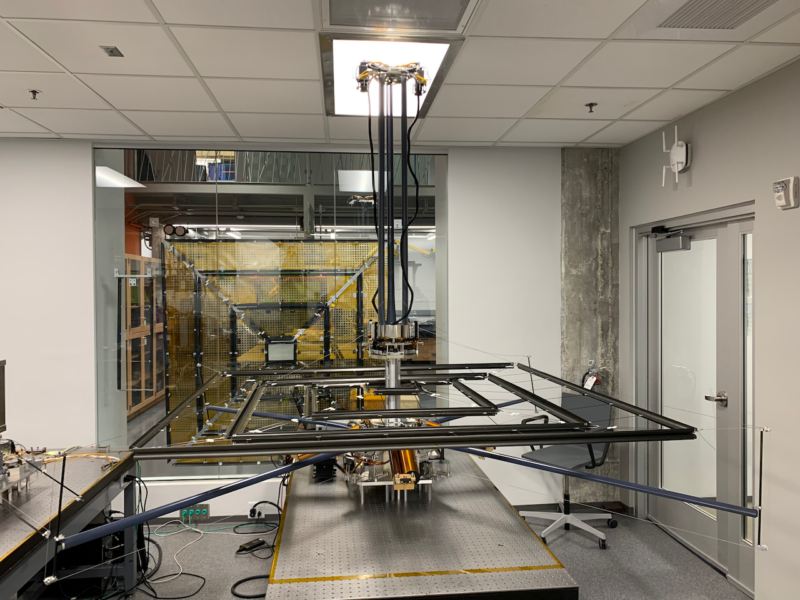
The hardware consists of MAPLE (Microwave Array for Low Earth Orbit Transmission Experiment), a set of lightweight and flexible microwave transmitters that allow large transmissions to be accurately transmitted to a single receiver. MAPLE has two separate receivers on board to test the live streaming option.
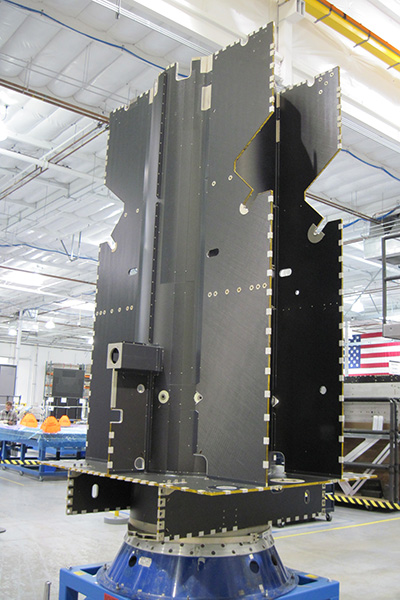
DOLCE is an ultralight hybrid experiment that can be deployed into orbit and will go into orbit to cover an area of four square meters one day. He wants to test the structure used to expand and support solar panels in space.
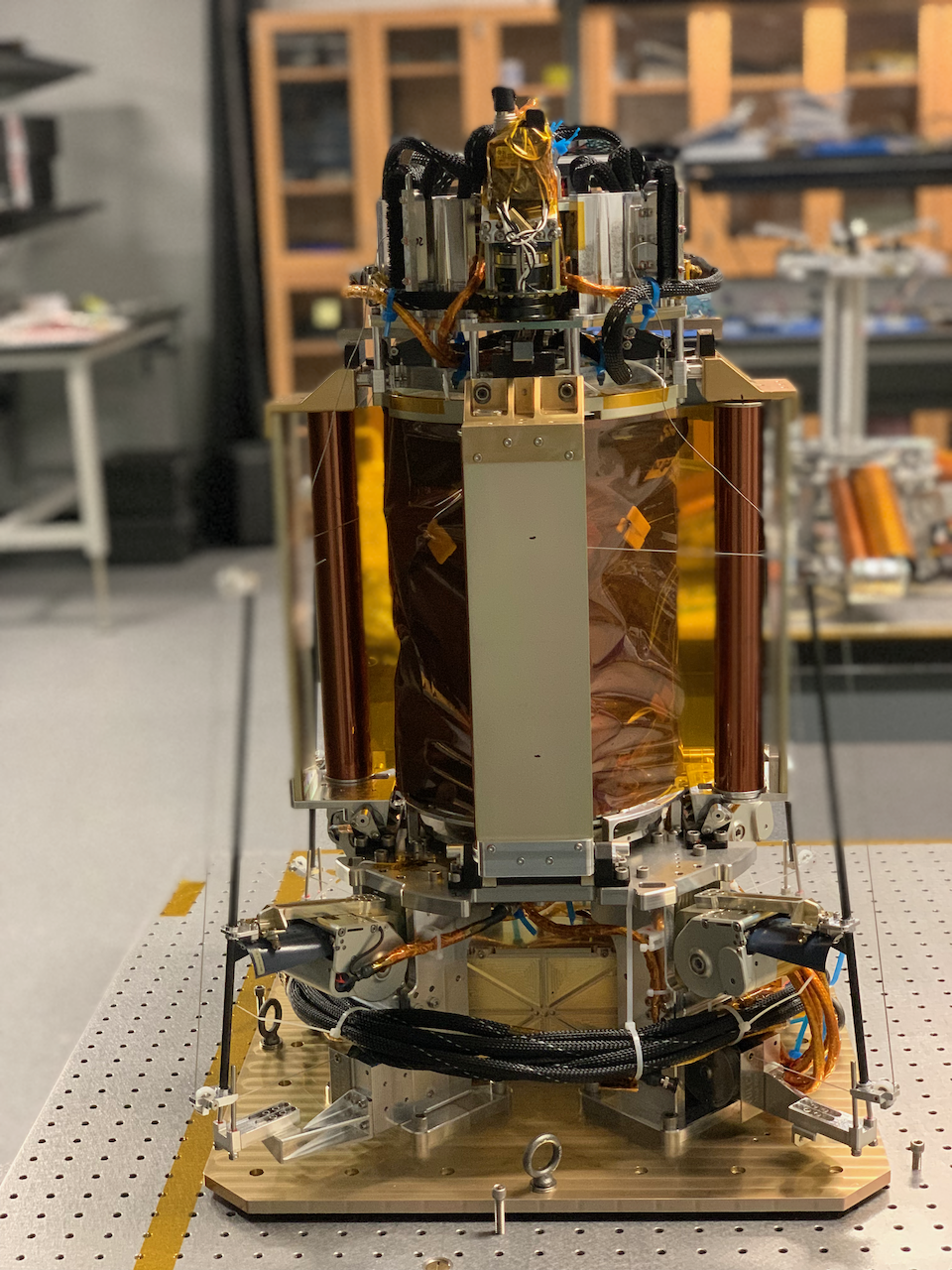
Caltech doesn't say what ALBA is, but it will be a collection of 22 different photovoltaic materials that will be used to determine if it will hold up well in space.
All the instruments are connected to commercial orbital vehicles that are used to place small satellites in the desired orbits. DOLCE's tests, which will primarily determine whether or not it works successfully, are expected to take place relatively quickly, with the results recorded by onboard video cameras and transmitted back to Earth. By contrast, they expect orbital tests of photovoltaic materials to take about six months to produce clear results.
the first steps
It's not hard to see why this was done by a university group and not a private company. Space is expensive, and we don't know what technology will work to generate and transmit power from orbit. This is a very risky idea for a private company, especially when the price of renewable energy on Earth is falling. Depending on where we are testing, it may be a long time before we can implement a location-based solar array.
But somehow this time could be the right one. According to current estimates, we can achieve a very high percentage of renewable energy around 70 percent without much difficulty. However, future decarbonization is becoming more difficult as issues such as seasonal changes and freak weather conditions that dramatically reduce electricity generation become more difficult to manage.
Very few places on the planet come close to 70 percent, and very few places have committed to getting rid of their power grids entirely. Therefore, you may not have any serious problems for decades. So there is the possibility of removing solar energy from space, at the same time that we have to take more complex and expensive carbon reduction measures.

