

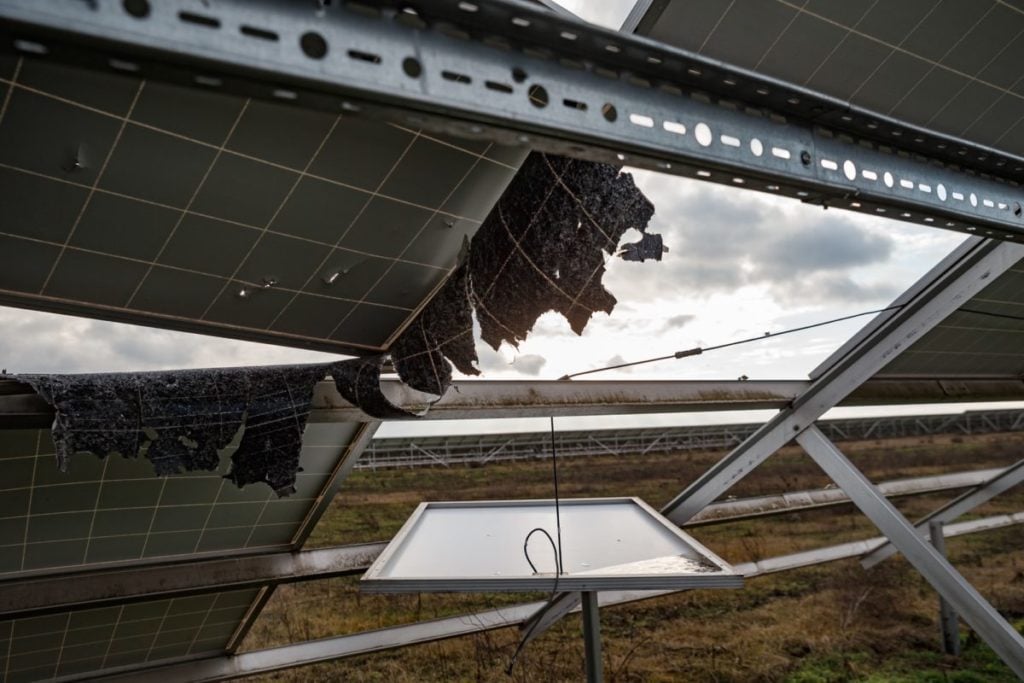
Energy infrastructure is often a major target of war, leaving people in the dark and limiting many services and technologies. This has led companies and countries to turn to technologies like solar power, which provide light to warring nations.
As a technology, it is cheap, quick to deploy and once operational, it does not rely on a fixed fuel supply but can be deployed in a variety of sizes and locations.
Bartos Majewski, CEO of photovoltaic distributor Menlo Electric, said: “Solar systems can provide a reliable source of energy in emergencies such as natural disasters or conflicts, such as power outages.
"An important advantage of solar systems is their decentralization in the event of a targeted attack on centralized power infrastructure. Solar systems, especially hybrid or off-grid systems, provide a stable supply of electricity that can operate off-grid. More resistant to missile attacks. My The best example for that is a solar house." So the stations allowed Maripol to cook, saving the lives of the encircled people. I wish it was different and more people could survive. electricity
We've seen the use of solar energy in regions like Syria, Yemen and Ukraine in the past year as countries seek to ensure energy security in extremely difficult situations.
The sun in war zones around the world
The potential of solar energy to power war-torn areas is well established. For example, as the war in Yemen continues and the country's crisis enters its ninth year, many charities and businesses have used solar energy to help people.
In March 2015, Yemen's largest power plant in Marib, which was responsible for most of the country's supply, shut down. High electricity prices from private generators and fuel shortages have left large parts of the country in the dark, the World Bank said.
But as a result, there has been a boom in companies installing and selling low-cost solar systems, with many small electronics retailers offering them.
For those who still find the cost prohibitive, the World Bank's Yemen Emergency Power Project has helped fill the gap. Between 2018 and 2022, it has installed solar systems in 91,715 households in rural and suburban areas, installed a total of 6.45 MW of solar power in 517 critical installations and has done much to provide solar power to war-torn women. and develop the skills and supply chain needed to grow the sector.
According to the World Bank, more than half of Yemen's population today uses solar energy as their main source of electricity.
Elsewhere, solar power has been used in the Syrian war, with initiatives such as the Union of Medical and Aid Organizations (UOSSM) Syria Solar, which provides technology to hospitals where they can operate in difficult conditions.
Commenting on 2019, UOSMS International Council Member and Army Surgeon Dr. Anas Al Qassem said: “In the last three months, 34 medical centers have been bombed in northwestern Syria. After eight years of conflict, power grids have been disrupted in many parts of Syria, leaving many health facilities dependent on diesel generators. Frequent fuel shortages and rising fuel prices threaten the lives of patients. »
The group launched a second solar power system in northwestern Syria on July 22, 2019. The 90 kW solar photovoltaic system consists of 300 panels, 12 inverters, 216 batteries and an advanced data management system.
These systems not only ensure continuous operation of critical infrastructure, but also save around 60,000 liters of diesel per year. It covers 40-45% of the hospital's energy costs, allowing money to be directed to medical services.
Reconstruction of solar energy in independent regions of Ukraine
Artillery and rocket fire generators, targeting the power grid and the wider energy sector, with 30% of Ukraine's power plants destroyed by October 2022.
A glimmer of hope, however, is the Trifonivska solar power plant in Kherson province, which continues to operate after being liberated by Russian forces in November. DTech, owner and operator of a 10 MW solar site, has worked through the challenges of war to rebuild its grid, allowing it to contribute to the country's energy mix.
According to Oleksandr Selishchev, CEO of DTEK Renewables, the plant has a particularly important location for the company, which means that its launch has particularly boosted the morale of the company and the region. "We build many large photovoltaic plants, but our first daughter (Tryfonivska) is particularly important to us, and we were very happy when we realized that the site was empty at the beginning of October."
In November, the company was allowed to return to its post after an Army review confirmed it was largely grounded. Currently, there is a shortage of miners and other mining professionals, delaying returns.
Back on the scene, DTech began assessing the damage. Selishchev said 40% of panels and 30% of inverters were damaged, destroyed or stolen, but the biggest shock was that the local substation was completely destroyed.
"One of our main tasks is to help our regional distribution company, Khersonblenargo, to install new transformers. Unfortunately, the "Khersonblenargo" unit has suffered a lot, they lack staff, lack of funds. In fact, we use our own workforce. Our sister company DTEK [to help them] from the grid. They help them recover the cables. , and now we are discussing some options to improve the use of medium or high voltage networks as soon as possible.
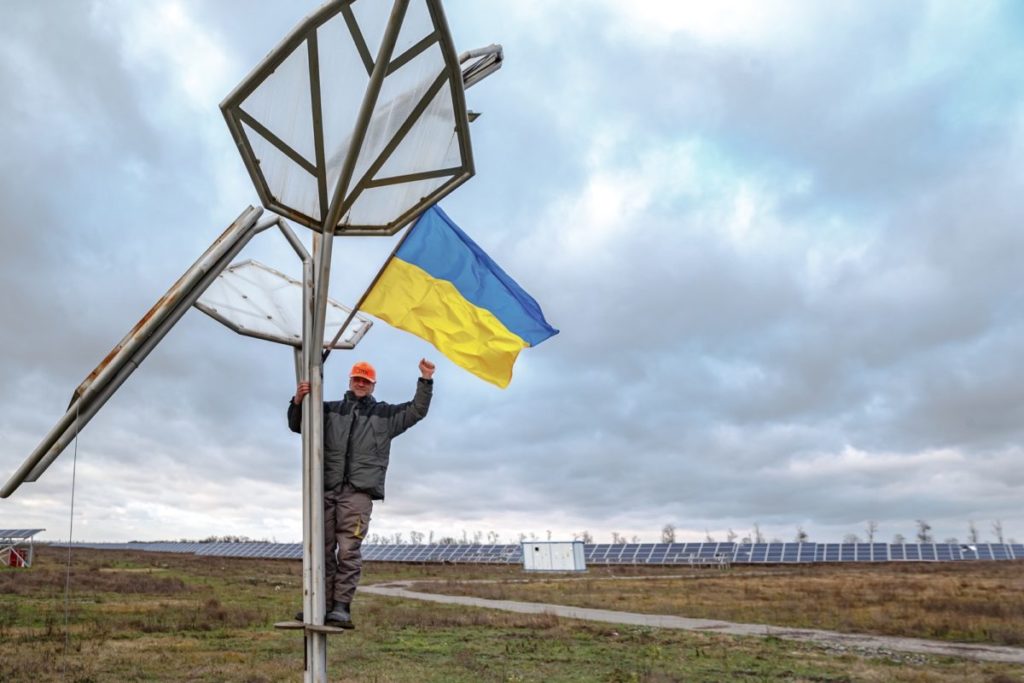
After returning to the site and building the necessary staff village to house the additional staff, DTech began restructuring. This involves evaluating each panel and inverter, removing the damaged ones and configuring the site to work with the rest.
While this is a somewhat unusual feat for solar designers, according to Selishchev, it is one that the group was able to achieve by taking advantage of the new mindset driving the Ukrainian public.
"It's not like normal life. War has brought a change of heart. So we are fighting harder to achieve our goals," he said.
So the operations team, usually responsible for controlling the flow of electricity, took on a variety of tasks, from assembling inverters to clearing administrative buildings of Russians.
"Of course I think our workers are heroes, who take risks, because the area is not completely cleared yet. Of course, we mark with special wires, safe roads and dangerous places. But we all understand it. Said that it is a completely safe environment. Not like, and they are really heroes," Selishchev said.
During the rehabilitation of the substation, the Trifonivska solar power plant was connected to a low voltage line, allowing 2 MW of energy to enter the system.
“Of course, we understand that it is not big, but it is actually very important at least for local villages and small towns, because the main network has suffered a lot and in any case it is very important to support it; network system in the region, even if it is little within our capabilities", said Selishchev.
As much as possible, DTEK plans to restore the space to its original capacity, but faces challenges in building panels and inverters to fit the system.
Modular system and roof support
In addition to Ukraine's massive solar power plants, which are helping to provide valuable clean energy, a number of smaller projects are quickly underway.
Lithuanian solar module company Solitek has donated solar panels to Ukraine for humanitarian projects, which will be used to build mobile power plants. These Ukrainian soldiers are using surveillance drones and doctors at mobile medical stations.
Besides being suitable for modular solutions, solar lighting has the added advantage of being easy to transport, small and compact, as well as error-free and fuel-efficient.
Similar solutions are offered by other collaborative partnerships such as Computer Aid International, Community Organized Relief Efforts, SimplyHealth and Zix Without Borders, which deploy solutions such as mobile communication containers at sites in Ukraine.
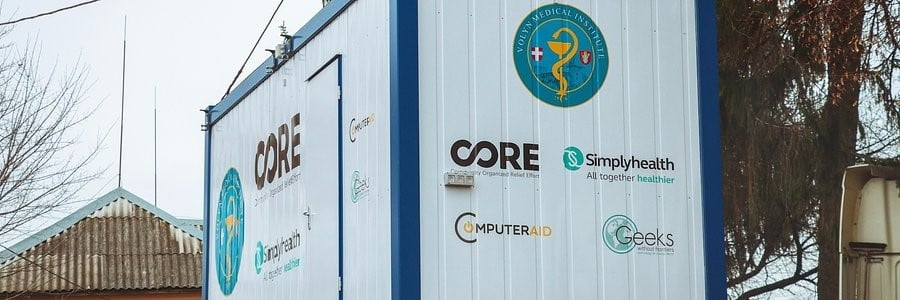
These are solar-powered shipping containers, the first of which was installed in December to train medical students at the Volyn Medical Institute in Lutsk, Ukraine.
Elsewhere, companies are scrambling to quickly deploy permanent solar installations. For example, Menlo Electric is working with the Energy Act Ukraine (EA4U) Foundation to install ten 300 kW installations at schools and hospitals.
“The project aims to reduce the time facilities are without power and enable schools and hospitals to use stored energy during power outages, reducing their dependence on the grid and utility bills. Energy,” explains founder Yuliana Onishchuk. EA4U:
“Hospitals have serious problems with power supply, or worse, none at all. Therefore, providing medical assistance is difficult and in some cases saving lives is impossible. The fund aims to equip 50 hospitals and 100 schools with solar power plants within five years.
EA4U conducts a multi-stage selection process to select the most suitable countries for the 100RESforSchools and 50RESforSchools and 50RESforSchools programs. One of the main problems is the front and proximity of the borders of Russia and Belarus, the sites must be located 60 km from them.
Schools and hospitals must be functional, using offline schools or using mixed attendance, that is, equipped with underground shelters, according to Ukrainian law. Additionally, due to the vulnerability of the roof, it poses an additional risk during the installation process.
Hospitals with operating rooms, intensive care units and maternity wards were selected as medical units that require a stable power supply. This is a compelling reason to include solar and battery storage assets in these locations.
"Capacity plays an important role in the selection of energy storage, especially for hospitals where uninterrupted power supply is essential for critical equipment such as life support systems, ventilators and surgical instruments. Hospital batteries typically have at least twice the capacity of solar energy. Operating rooms/"intensive care units /It often takes many hours to meet the energy needs of critical equipment in the maternity ward," said Menlo. Majewski, CEO of Electric.
"When we determine the capacity of a solar system for a school, we consider the cost of the bomb shelter (which is connected to our solar system by default), the number of rooms selected by the school (usually the classrooms that need electricity. for computers) and public lighting. (those who go home after school when there is no day off) to ensure the safety of students).
A typical project configuration is shown in the table below.
The use of solar energy during war presents many additional challenges as well as clear advantages.
“The safety risks associated with the construction of a rooftop solar power plant in Ukraine have not outweighed the importance of decentralized energy sources since 24.02.2022. This is why we need decentralized manufacturing to deliver our projects. Juliana Onischuk, founder of EA4U, said: Wartime critical and social infrastructure facilities for renewable energy and energy storage support sustainable development.
"In the medium and long term, skilled labor shortages may become more urgent. Before the massive occupation, many men were employed in Ukraine's energy sector, particularly in STEM occupations. Many men are currently being drafted into Ukraine's armed forces, and as long as the war continues, many will may be called in. This may increase the shortage of qualified engineers, installation specialists and renewable energy electricians.
যাইহোক, সবচেয়ে বড় চ্যালেঞ্জ হল অনুদানের পর্যাপ্ত এবং অবিচলিত প্রবাহ নিশ্চিত করা, ওনিশ্চুক বলেছেন। EA4U 2028 সালের মধ্যে 100 এবং 50টি স্কুল এবং হাসপাতালে মোতায়েন করার লক্ষ্য রাখে।
দীর্ঘমেয়াদে জীবাশ্ম জ্বালানির উপর অতিরিক্ত নির্ভরতা হ্রাস করুন
এটা স্পষ্ট যে সৌর শক্তি যুদ্ধ-বিধ্বস্ত মানুষের জন্য তাদের দৈনন্দিন জীবন চালিয়ে যেতে এবং প্রয়োজনীয় অবকাঠামো সমর্থন করার জন্য শক্তির একটি গুরুত্বপূর্ণ উৎস। অধিকন্তু, যেহেতু এটি মূলত উৎপাদনের একটি স্বাধীন উৎস, তাই এটি উন্নয়নশীল দেশগুলির জন্য অধিকতর নিরাপত্তা প্রদান করবে, যা তাদের রাশিয়ার মতো তেলের প্রধান সংস্থাগুলির উপর কম নির্ভরশীল করে তুলবে।
ইউক্রেনে রাশিয়ার আগ্রাসনের পর থেকে, সৌর বিদ্যুতের প্রতি আগ্রহ শুধু ইউক্রেনেই নয় বরং ইউরোপ জুড়ে বেড়েছে কারণ সরকারগুলি আরও নমনীয়তা তৈরি করতে চায়৷
বার্ষিক ইভেন্টে চ্যাথাম হাউস গ্রুপের বার্নিস লি বলেছেন: “স্পষ্ট শিক্ষা হল যে শক্তি সুরক্ষা এবং নেট শূন্য একসাথে চলতে পারে এবং হওয়া উচিত, কারণ পুনর্নবীকরণযোগ্য শক্তি আমদানি করা জীবাশ্ম জ্বালানীতে অতিরিক্ত নির্ভরতার চেয়ে সস্তা, নিরাপদ এবং শক্তিশালী। "আক্রমণ।
"সংঘাতের প্রতিক্রিয়া দেখিয়েছে যে যেখানে স্বার্থ আছে, সেখানে একটি পরিষ্কার ভবিষ্যতের অনেক পথ রয়েছে যেখানে ইউরোপীয়দের অভাব রয়েছে। আক্রমণের এক বছর পর, ক্লিন টেকনোলজিতে রূপান্তর মার্কিন যুক্তরাষ্ট্রে জনপ্রিয় মুদ্রাস্ফীতির মতো ত্বরান্বিত হচ্ছে; হ্রাস বিল ইইউকে ভবিষ্যতের পরিচ্ছন্ন প্রযুক্তি বিকাশের দৌড়ে ঠেলে দেয়।"
এই নিবন্ধটি মূলত PV Tech-এর ত্রৈমাসিক প্রকাশনা, PV Tech Power-এ প্রকাশিত হয়েছে। আপনি এখানে PV Tech Power 34 এর সর্বশেষ সংখ্যাটি পড়তে পারেন।

